
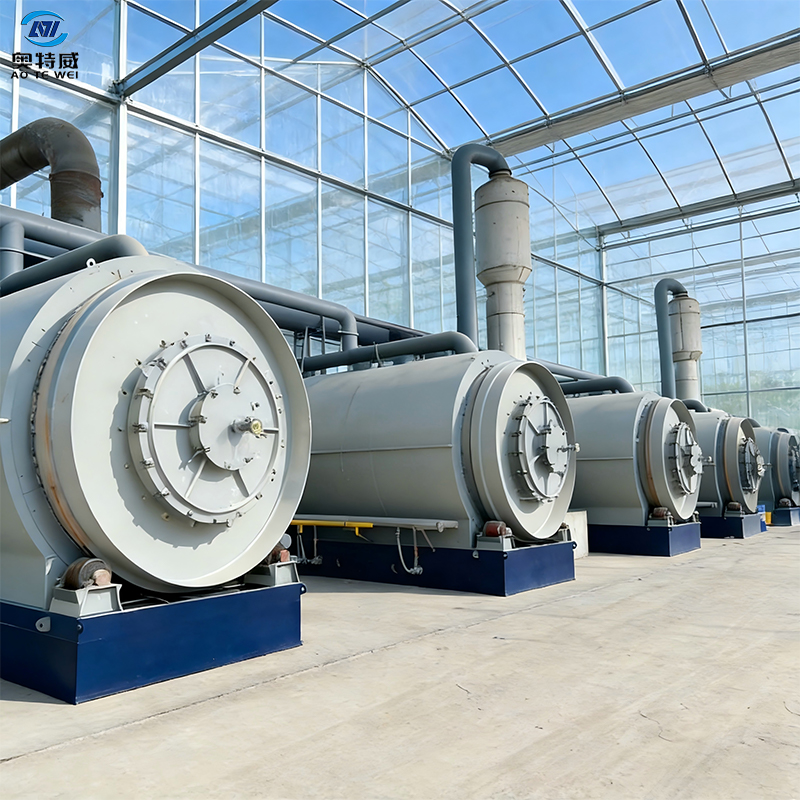
Industrial manufacturers face significant operational challenges when production must halt for maintenance or equipment downtime. A continuous pyrolysis plant eliminates these disruptions by maintaining consistent, uninterrupted output throughout the operational cycle. Unlike traditional batch processing systems, a continuous pyrolysis plant operates with seamless feed introduction and controlled residence times, allowing manufacturers to meet strict production quotas without unexpected shutdowns. This engineering approach transforms production reliability from a vulnerability into a competitive advantage, particularly in industries where downtime directly impacts revenue and client commitments.
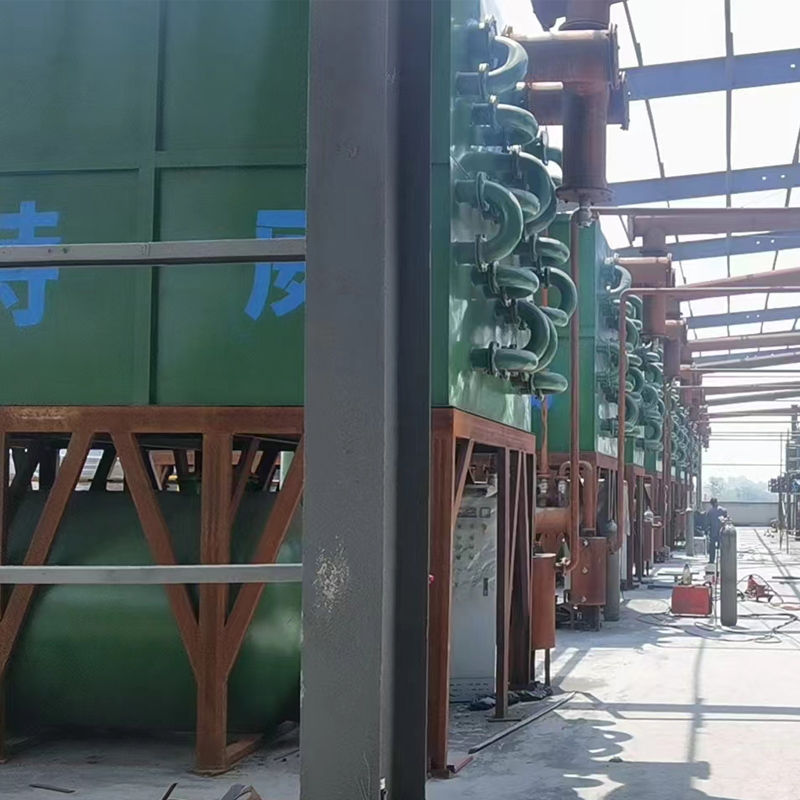
The foundation of continuous operation rests on integrated automation and redundant system design. A continuous pyrolysis plant incorporates real-time monitoring, automated feed control, and temperature regulation that work together to sustain stable conditions without manual intervention. The system's architecture eliminates the stop-start cycles inherent in batch methods, reducing thermal stress on equipment and extending operational lifespan. Manufacturers adopting continuous pyrolysis plant technology report measurable improvements in throughput, energy efficiency, and product consistency, making the investment justified across multiple financial and operational dimensions.
How Continuous Pyrolysis Plant Design Maintains Uninterrupted Operation
Integrated Automation and Real-Time Control Systems
A continuous pyrolysis plant relies on sophisticated automation to eliminate production gaps. Sensors monitor temperature, pressure, and feed rate continuously, transmitting data to central control systems that adjust parameters in real-time. When a continuous pyrolysis plant detects deviation from optimal conditions, automated responses occur within seconds, preventing the manual interventions that would interrupt flow. This intelligent design means operators focus on monitoring and strategic decisions rather than reactive problem-solving that halts production. The redundancy built into control systems ensures that a continuous pyrolysis plant remains operational even if individual components experience minor failures.
Steady-State Feed Introduction and Processing
Unlike batch systems requiring complete load-discharge cycles, a continuous pyrolysis plant maintains steady feed introduction throughout operation. Material enters the reaction chamber at constant rates while processed output exits simultaneously, creating a balanced flow state. This continuous pyrolysis plant approach eliminates the thermal shock and pressure fluctuations that occur during batch changeovers. Manufacturers experience consistent product quality because conditions remain stable, and a continuous pyrolysis plant naturally prevents the temperature swings and residence time variability that plague intermittent methods. The steady-state design also simplifies workforce scheduling, as a continuous pyrolysis plant requires fewer operator interventions per shift.
Reliability and Maintenance Advantages of Continuous Processing
Reduced Equipment Stress and Extended Service Life
Continuous operation under stable conditions places significantly lower stress on mechanical and thermal components compared to cyclic batch processing. A continuous pyrolysis plant avoids the startup surges and cooling phases that generate material fatigue in traditional equipment. Each component of a continuous pyrolysis plant experiences predictable loads at consistent levels, allowing engineers to design for specific operational profiles rather than peak transient conditions. This targeted design philosophy translates to extended intervals between major maintenance events and lower replacement frequency for wear components. Industrial operators report that a continuous pyrolysis plant typically requires fewer unplanned shutdowns than equivalent batch capacity alternatives, directly improving production availability metrics.
Predictable Maintenance Windows and Scheduled Downtime
Because a continuous pyrolysis plant operates under stable, predictable conditions, maintenance needs become forecastable rather than emergency-driven. Operators can schedule routine service during planned shutdowns rather than responding to failures that disrupt customer commitments. A continuous pyrolysis plant's consistent operating envelope allows maintenance teams to accumulate historical data on wear patterns, enabling proactive component replacement before failure occurs. Scheduled downtime for a continuous pyrolysis plant typically occurs at lower frequency and consumes less total time than reactive maintenance cycles. This scheduling advantage allows manufacturers to negotiate reliable delivery commitments with customers, strengthening market position and client relationships.
Production Efficiency and Output Stability Through Continuous Operation
Consistent Throughput and Product Quality
A continuous pyrolysis plant delivers predictable hourly output rates because processing conditions remain uniform across the operating cycle. Temperature stability, residence time consistency, and automated feed control combine to produce material batches with minimal variation from target specifications. Manufacturers using a continuous pyrolysis plant report reduced quality control rejects and improved yield metrics compared to batch methods. The elimination of startup and shutdown transients means every unit produced by a continuous pyrolysis plant meets specification requirements without the out-of-spec material that batch systems generate during mode transitions. This quality consistency enables customers to rely on standardized material properties, strengthening supply chain relationships.
Energy Efficiency and Operational Cost Reduction
A continuous pyrolysis plant achieves superior energy efficiency through several integrated mechanisms. The elimination of repeated heating and cooling cycles reduces total thermal energy demand compared to batch methods running equivalent capacity. A continuous pyrolysis plant maintains operating conditions at optimal levels continuously rather than cycling between full heat and cool phases. Heat recovery systems integrated into continuous pyrolysis plant designs capture energy more efficiently when conditions remain stable, improving overall thermal performance. Manufacturers report that a continuous pyrolysis plant's operational cost per unit of output typically decreases by fifteen to twenty-five percent compared to traditional batch equipment, with savings accumulating significantly over multiple years of operation.
FAQ
What specific challenges does a continuous pyrolysis plant solve for industrial manufacturers?
A continuous pyrolysis plant eliminates production disruptions caused by batch changeovers, thermal cycling stress, and emergency equipment failures. Manufacturers gain predictable output rates, consistent product quality, lower maintenance frequency, and improved capital utilization. By maintaining stable operating conditions rather than cycling between startup and shutdown phases, a continuous pyrolysis plant reduces downtime incidents that interrupt customer commitments and damage market reputation. The system also reduces training burden on operators by automating complex control functions that batch systems require manual intervention to manage.
How does a continuous pyrolysis plant compare to batch pyrolysis systems in terms of reliability?
A continuous pyrolysis plant operates under steady conditions that minimize equipment stress, extending component lifespan significantly compared to batch methods that experience repeated thermal and pressure cycling. Maintenance for a continuous pyrolysis plant becomes predictable and schedulable rather than emergency-driven, reducing unplanned downtime frequency. Batch systems require more frequent major overhauls because cyclic operation concentrates wear in specific phases, while a continuous pyrolysis plant distributes operational demand uniformly. Industrial data consistently shows that a continuous pyrolysis plant achieves higher uptime percentages and requires fewer emergency repairs than equivalent-capacity batch alternatives operating in identical manufacturing environments.
What investment considerations should manufacturers evaluate before installing a continuous pyrolysis plant?
Manufacturers should assess initial capital costs, facility space requirements, automation infrastructure, and staff training needs when evaluating a continuous pyrolysis plant investment. Long-term financial analysis should factor in reduced maintenance costs, improved throughput per square foot, energy savings, and quality improvements that a continuous pyrolysis plant delivers. Return on investment typically occurs within three to five years for manufacturers with sufficient production volume, making a continuous pyrolysis plant financially attractive for committed industrial operations. Facility layout planning should incorporate continuous pyrolysis plant space requirements and automation infrastructure before installation begins to maximize operational efficiency gains.
Table of Contents
- How Continuous Pyrolysis Plant Design Maintains Uninterrupted Operation
- Reliability and Maintenance Advantages of Continuous Processing
- Production Efficiency and Output Stability Through Continuous Operation
-
FAQ
- What specific challenges does a continuous pyrolysis plant solve for industrial manufacturers?
- How does a continuous pyrolysis plant compare to batch pyrolysis systems in terms of reliability?
- What investment considerations should manufacturers evaluate before installing a continuous pyrolysis plant?