Distillation in Petroleum Refining: Efficient Separation Technology for Maximum Product Yield

Get a Free Quote

Our representative will contact you soon.
Email
WhatsApp / Mobile
Name
Company Name
Message
0/1000

distillation in petroleum refining

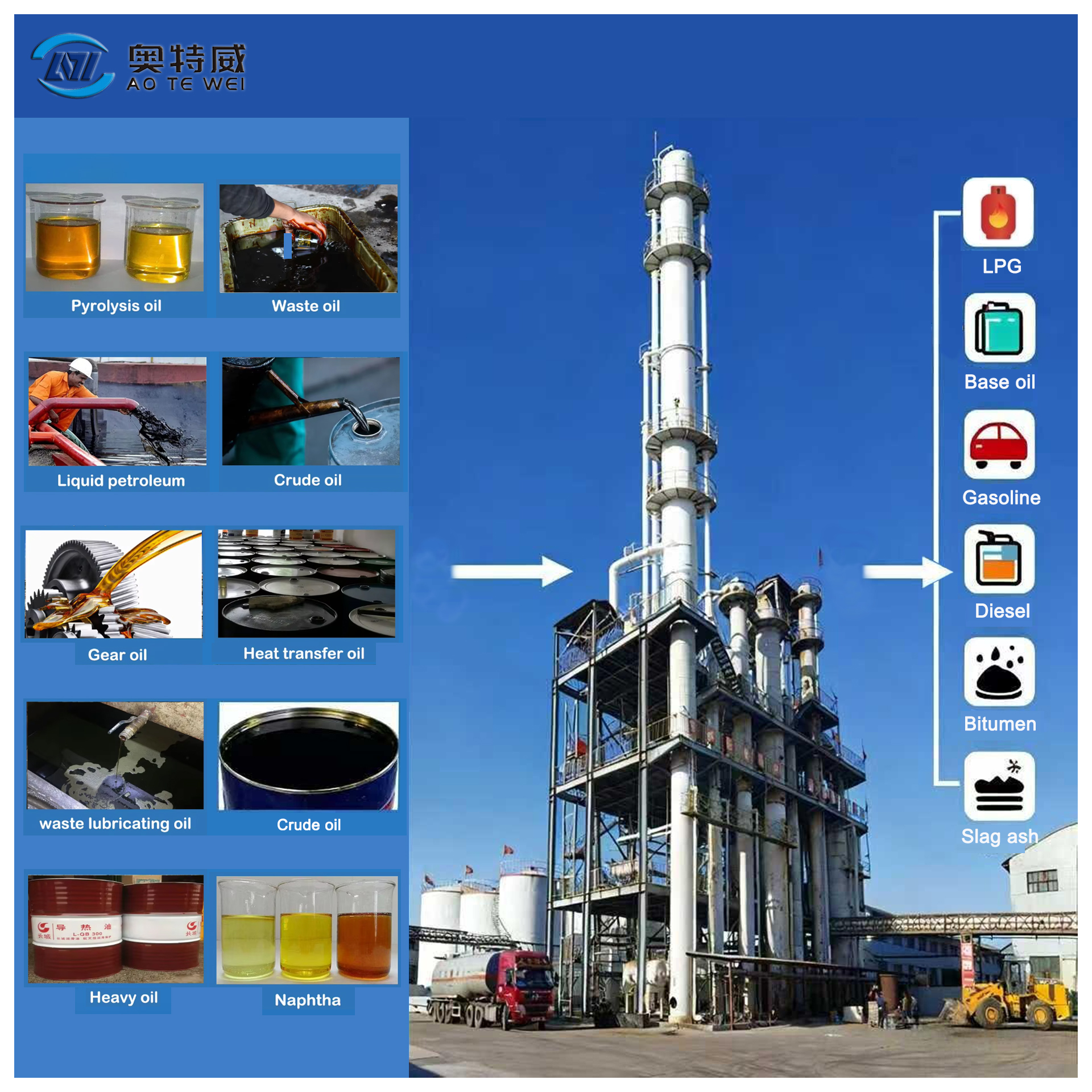
Distillation in petroleum refining is one of the most fundamental and widely used separation processes in the energy industry. At its core, this process takes crude oil, a complex mixture of hydrocarbons with varying molecular weights and boiling points, and separates it into distinct fractions that each serve specific commercial and industrial purposes. The process works by heating crude oil to high temperatures, causing different components to vaporize at different points, and then condensing those vapors into separate product streams. This physical separation method does not require chemical reactions, making it a highly efficient and reliable way to unlock the value locked within raw crude oil. The primary function of distillation in petroleum refining is to produce a wide range of usable products from a single feedstock. These products include liquefied petroleum gas, naphtha, gasoline, kerosene, jet fuel, diesel, gas oil, and heavy residual fuel oil. Each fraction is collected at a different level within the distillation column, where temperature gradients allow precise separation based on boiling point ranges. Modern petroleum refineries typically operate atmospheric distillation units as the first stage of processing, followed by vacuum distillation units that handle heavier residues which cannot be vaporized at atmospheric pressure without thermal cracking. Technologically, distillation columns used in petroleum refining are engineered with trays or structured packing to maximize contact between rising vapors and descending liquids, improving separation efficiency. Advanced process control systems monitor temperature, pressure, and flow rates in real time, ensuring consistent product quality and energy optimization. Heat integration strategies, such as using hot product streams to preheat incoming crude oil, significantly reduce energy consumption across the refinery. The applications of distillation in petroleum refining extend beyond fuel production. Naphtha fractions serve as feedstocks for petrochemical plants producing plastics, synthetic fibers, and solvents. Kerosene and jet fuel fractions power aviation and heating systems worldwide. Diesel fractions drive transportation and industrial machinery. The versatility and scalability of distillation technology make it indispensable to modern energy infrastructure, supporting everything from everyday transportation to large-scale industrial manufacturing.

Popular Products

Distillation in petroleum refining delivers a set of practical, real-world benefits that make it the backbone of every modern refinery operation. Understanding these advantages helps businesses and operators appreciate why this process remains the first choice for separating crude oil into valuable products. First, distillation in petroleum refining gives you a wide range of products from a single input. When crude oil enters the distillation column, it does not produce just one product. It yields gasoline, diesel, jet fuel, kerosene, naphtha, and heavy fuel oil all in one continuous operation. This means refiners get maximum value from every barrel of crude they purchase, reducing waste and improving overall profitability. Second, the process runs continuously without stopping. Unlike batch processes that require loading, processing, and unloading cycles, distillation in petroleum refining operates around the clock. Refineries can process thousands of barrels per day without interruption, which keeps production costs low and supply chains reliable. Customers who depend on consistent fuel supplies benefit directly from this uninterrupted output. Third, distillation in petroleum refining is highly energy efficient when designed with modern heat integration. Refineries recover heat from hot product streams and use it to preheat incoming crude oil. This recycling of thermal energy cuts fuel consumption significantly, lowering operating costs and reducing the carbon footprint of the refining process. For businesses focused on sustainability and cost control, this efficiency translates into lower prices and a smaller environmental impact. Fourth, the technology scales easily to match demand. Whether a refinery processes 10,000 barrels per day or 500,000 barrels per day, distillation columns can be designed and sized accordingly. This scalability means that both small regional refineries and large export-oriented facilities can use the same fundamental process, adapting it to their specific capacity needs without sacrificing performance or product quality. Fifth, distillation in petroleum refining produces consistent, specification-grade products. Advanced process control systems monitor every variable in real time, from temperature and pressure to flow rates and product composition. Operators can make immediate adjustments to maintain product quality within tight specifications, ensuring that gasoline meets octane requirements, jet fuel meets aviation standards, and diesel meets emission regulations. This reliability builds trust with customers and reduces costly off-specification production. Sixth, the process integrates seamlessly with downstream refinery units. The fractions produced by distillation in petroleum refining feed directly into catalytic crackers, hydrotreaters, reformers, and other secondary processing units. This integration allows refineries to upgrade lower-value fractions into higher-value products, maximizing the economic return from each barrel of crude oil processed. Seventh, maintenance and operation of distillation units are well understood across the industry. Decades of operational experience mean that engineers and technicians have deep knowledge of how to keep these units running safely and efficiently. Spare parts are widely available, troubleshooting procedures are well documented, and training programs are established, all of which reduce downtime and operational risk for refinery operators.

Latest News

Company Updates Factory Audit Video | On-site Shooting of Aotewei Environmental Protection Equipment, Transparently Showing Manufacturing Strength

08

Apr

Company Updates Factory Audit Video | On-site Shooting of Aotewei Environmental Protection Equipment, Transparently Showing Manufacturing Strength

To further improve supply chain transparency and optimize the factory audit experience for domestic and overseas customers, Shangqiu Aotewei Environmental Protection Equipment Co., Ltd. has recently completed a comprehensive update of its factory aud...
View More

Get a Free Quote

Our representative will contact you soon.
Email
WhatsApp / Mobile
Name
Company Name
Message
0/1000

distillation in petroleum refining

Comprehensive Product Range Through Precise Fractional Separation

Comprehensive Product Range Through Precise Fractional Separation

One of the most compelling advantages of distillation in petroleum refining is its ability to produce a comprehensive spectrum of petroleum products from a single crude oil feedstock in one continuous operation. This capability is rooted in the fundamental principle of fractional distillation, where crude oil is heated and its components are separated based on their individual boiling points within a tall distillation column. Each fraction condenses at a different height in the column, allowing operators to draw off distinct product streams simultaneously. The lightest fractions, including liquefied petroleum gas and light naphtha, rise to the top of the column where temperatures are lowest. Moving down the column, heavier fractions such as gasoline, jet fuel, kerosene, and diesel are collected at progressively lower heights and higher temperatures. At the very bottom, heavy gas oil and atmospheric residue are withdrawn for further processing in vacuum distillation units or upgrading in secondary conversion units. This single-column, multi-product output model is extraordinarily valuable from a commercial standpoint. Refiners do not need separate processing trains for each product type. Instead, one well-designed distillation unit handles the entire initial separation, dramatically reducing capital investment and operational complexity. For customers purchasing refined products, this efficiency in production translates into competitive pricing and reliable availability across a wide product portfolio. The precision of fractional separation in distillation in petroleum refining also means that each product stream meets the quality specifications required by its end market. Gasoline fractions are directed to reforming units to boost octane ratings. Jet fuel fractions are hydrotreated to remove sulfur and meet strict aviation standards. Diesel fractions are processed to comply with increasingly stringent emission regulations worldwide. The ability to tailor each fraction for its specific downstream application makes distillation in petroleum refining not just a separation tool but a strategic enabler of product quality management across the entire refinery. Furthermore, the flexibility of distillation in petroleum refining allows refiners to adjust their product slate in response to market demand. By modifying operating conditions such as temperature profiles and cut points, operators can shift production toward higher-demand products, maximizing revenue during periods of strong market pricing for specific fuels. This operational flexibility is a significant competitive advantage in a market where fuel demand patterns shift seasonally and in response to economic conditions.
Energy Efficiency and Sustainable Operations in Modern Refining

Energy Efficiency and Sustainable Operations in Modern Refining

Energy efficiency is a defining feature of well-designed distillation in petroleum refining systems, and it represents one of the most important practical benefits for refinery operators and their customers. Crude oil distillation is inherently energy intensive because large volumes of liquid must be heated to high temperatures to drive vaporization. However, modern engineering approaches have transformed distillation in petroleum refining into a process that recovers and reuses thermal energy with impressive effectiveness, significantly reducing the net energy input required per barrel of crude processed. The primary mechanism for achieving this efficiency is heat integration through a network of heat exchangers known as the crude preheat train. In this system, hot product streams leaving the distillation column transfer their heat to incoming cold crude oil before those products are cooled for storage or further processing. This heat exchange reduces the amount of fuel that the refinery furnace must burn to bring crude oil up to distillation temperature, directly cutting fuel costs and greenhouse gas emissions. In a well-optimized refinery, the crude preheat train can recover enough energy to reduce furnace duty by 50 percent or more compared to an unintegrated design. Beyond the preheat train, distillation in petroleum refining benefits from advanced process control technologies that continuously optimize operating conditions to minimize energy waste. Model predictive control systems analyze real-time data from hundreds of sensors throughout the distillation unit and make automatic adjustments to maintain optimal separation efficiency while consuming the least possible energy. These systems prevent over-fractionation, which wastes energy by separating components more finely than product specifications require, and under-fractionation, which produces off-specification products that require reprocessing. For customers and stakeholders focused on environmental responsibility, the energy efficiency of distillation in petroleum refining directly supports sustainability goals. Lower energy consumption means lower carbon dioxide emissions per barrel of refined product, helping refineries meet increasingly strict environmental regulations and corporate sustainability commitments. As the global energy industry faces growing pressure to reduce its carbon footprint, the ability to demonstrate efficient, low-emission refining operations is a genuine competitive advantage. Refineries that invest in optimizing their distillation in petroleum refining operations position themselves as responsible producers capable of meeting both economic and environmental performance targets simultaneously.
Seamless Scalability and Integration With Downstream Refinery Processes

Seamless Scalability and Integration With Downstream Refinery Processes

The scalability and integration capabilities of distillation in petroleum refining make it uniquely suited to serve as the foundation of refinery operations at any scale, from small regional processing facilities to massive export-oriented complexes handling hundreds of thousands of barrels per day. This scalability is not simply a matter of building larger columns. It reflects the fundamental engineering flexibility of distillation technology, which can be configured, combined, and optimized to match the specific throughput requirements, crude oil types, and product objectives of any refinery project. At the design stage, distillation in petroleum refining units can be engineered with different column diameters, tray configurations, packing types, and operating pressures to handle a wide range of crude oil qualities, from light sweet crudes with high gasoline yields to heavy sour crudes rich in residual fuel oil. This adaptability means that refiners are not locked into processing a single type of crude. They can adjust their operations to take advantage of the most economically attractive crude oils available in the market at any given time, improving margins and supply security. The integration of distillation in petroleum refining with downstream processing units is equally important to its value proposition. The atmospheric distillation unit produces fractions that feed directly into catalytic reformers, which upgrade naphtha into high-octane gasoline blending components. Diesel and gas oil fractions flow to hydrotreating units that remove sulfur and nitrogen to meet clean fuel standards. Heavy atmospheric residue feeds vacuum distillation units, which extract additional gas oil for catalytic cracking, maximizing the conversion of low-value heavy oil into high-value transportation fuels. This tight integration between distillation in petroleum refining and secondary processing units creates a highly efficient refinery configuration where virtually every component of the crude oil is upgraded to its highest possible value. Refiners who optimize this integration achieve better product yields, lower processing costs, and stronger competitive positions in their markets. For customers, this means access to a reliable supply of high-quality refined products produced by a refinery that operates with maximum efficiency and minimum waste, delivering both economic and environmental value across the entire production chain.

Get a Free Quote

Our representative will contact you soon.
Email
WhatsApp / Mobile
Name
Company Name
Message
0/1000
Newsletter
Please Leave A Message With Us