
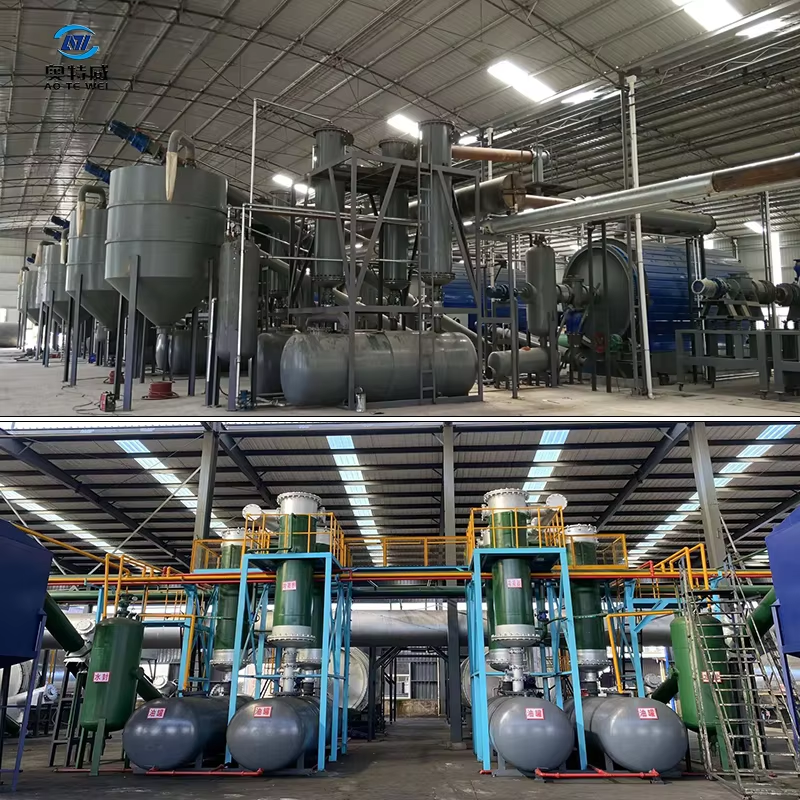
The global push toward circular economy principles has created significant demand for innovative recycling solutions, and the pyrolysis plant stands at the forefront of this transformation. A pyrolysis plant processes waste materials through high-temperature decomposition in an oxygen-free environment, converting challenging waste streams into valuable resources such as fuel oils, gases, and carbon residues. This technology fundamentally reshapes how businesses approach waste management and resource recovery, enabling companies to move beyond traditional linear disposal models toward truly sustainable operations. Understanding whether a pyrolysis plant can support environmentally friendly recycling business models requires examining both the technological capabilities and the economic realities of modern waste management.
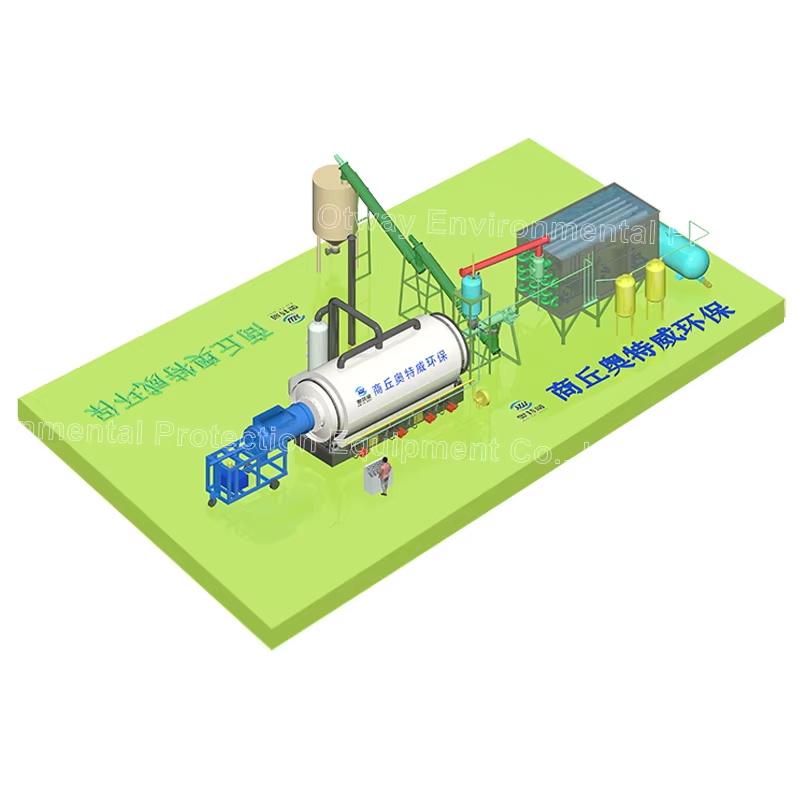
The answer is unequivocally yes. A pyrolysis plant delivers environmental and commercial advantages that directly support green recycling business models. By converting waste plastics, tires, and other polymeric materials into valuable byproducts, a pyrolysis plant reduces landfill dependency, minimizes greenhouse gas emissions, and creates new revenue streams from previously discarded materials. This combination of environmental responsibility and economic viability makes the pyrolysis plant an essential tool for companies seeking to build sustainable operations while meeting growing regulatory requirements and consumer expectations for circular business practices.
How Pyrolysis Plants Enable Environmental Sustainability
Resource Recovery and Waste Diversion
A pyrolysis plant transforms waste that would otherwise accumulate in landfills into usable energy and chemical feedstock. When waste plastics and tires enter the pyrolysis plant, the thermal decomposition process breaks molecular bonds, converting polymers into pyrolysis oil, diesel-like hydrocarbons, and synthesis gas. These outputs can serve as fuel for industrial processes, feedstock for petrochemical manufacturing, or energy sources for heating and power generation. This waste diversion capability directly reduces the environmental burden on landfill systems and atmospheric emissions from incineration, addressing two major waste management challenges simultaneously.
Emissions Reduction and Climate Impact
Operating a pyrolysis plant produces significantly lower carbon emissions compared to virgin plastic production or waste incineration. The pyrolysis plant generates byproducts that can replace fossil fuel inputs in manufacturing, creating a net reduction in lifecycle emissions. Additionally, by preventing waste decomposition in anaerobic landfill conditions, a pyrolysis plant eliminates methane emissions that would otherwise accelerate climate change. Many operations achieve carbon neutrality by using part of the pyrolysis plant's own gas output to power the system, creating a self-sufficient energy loop that exemplifies true environmental responsibility.
Economic Viability of Pyrolysis-Based Recycling Models
Revenue Diversification Through Multiple Outputs
The commercial strength of a pyrolysis plant lies in its ability to generate multiple revenue streams from a single waste input. Operators of a pyrolysis plant sell pyrolysis oil to refineries and chemical manufacturers, market synthesis gas to energy producers, and recover carbon black for use in tire manufacturing and pigments. This product diversification protects the business model from market volatility affecting any single commodity. Companies operating a pyrolysis plant can optimize output composition based on market demand, adjusting residence time and temperature to maximize value capture from waste materials that have virtually zero input cost.
Operational Cost Efficiency and Scalability
Modern pyrolysis plant designs achieve high operational efficiency through continuous processing, automated temperature control, and integrated emissions management systems. A pyrolysis plant operating at scale processes hundreds of kilograms daily with minimal labor requirements, creating favorable unit economics that improve as processing volume increases. The capital requirements for establishing a pyrolysis plant are offset by tipping fees charged to waste generators, gate fees from material input, and sales revenue from recovered products. This three-part revenue model makes a pyrolysis plant financial viability strong even in markets without subsidies, though regulatory credits and green incentives further strengthen the business case.
Building Compliant and Sustainable Recycling Operations
Regulatory Alignment and Environmental Certification
A pyrolysis plant designed to modern environmental standards meets or exceeds emissions regulations in most developed markets. Advanced pyrolysis plant systems include real-time emissions monitoring, scrubber technology to remove acid gases and particulates, and controlled exhaust treatment that prevents air quality degradation. By choosing a pyrolysis plant with appropriate environmental certifications and engineering, companies demonstrate genuine commitment to sustainability rather than merely shifting environmental burden to different waste streams. Regulatory bodies increasingly recognize pyrolysis plant technology as a legitimate circular economy solution, and operations with proper permitting enjoy competitive advantage through enhanced reputation and reduced legal risk.
Integration with Circular Supply Chains
A pyrolysis plant becomes most powerful when embedded within an integrated circular supply chain where waste collection networks feed the pyrolysis plant, and the pyrolysis plant's outputs supply downstream manufacturers who then use recycled content in new products. This ecosystem approach creates value at every stage while reducing total system emissions. Companies using a pyrolysis plant as a core asset can market their entire operation as part of a circular economy solution, attracting environmentally conscious customers and investment partners. The pyrolysis plant thus transcends being merely a waste processor and becomes a strategic platform for building competitive advantage through sustainability alignment.
FAQ
What types of waste can a pyrolysis plant process?
A pyrolysis plant handles various waste streams including post-consumer plastic films, rigid plastics, waste tires, industrial plastic scrap, and other polymer-based materials. The specific feedstock compatibility depends on the pyrolysis plant design and operating parameters. Most modern systems are engineered to process mixed plastics and tires, the two most abundant high-volume waste streams, though some specialized pyrolysis plant configurations target specific materials like e-waste or medical waste. Feed preparation and sorting influence pyrolysis plant efficiency, so operators typically implement screening to remove metals and inorganic contaminants before feeding material into the pyrolysis plant.
How much investment does establishing a pyrolysis plant require?
Capital requirements for a pyrolysis plant vary significantly based on processing capacity and technological sophistication. A small-scale pyrolysis plant suitable for regional operations might require investment between $500,000 and $2 million, while a large industrial-capacity pyrolysis plant processing multiple tons daily could require $5 million to $20 million. These figures include equipment, site infrastructure, environmental controls, and operational working capital. Return on investment for a pyrolysis plant typically occurs within 3 to 7 years depending on local waste availability, product pricing, and regulatory incentives. Operators should conduct detailed feasibility studies specific to their local market before committing capital to a pyrolysis plant project.
Can a pyrolysis plant operate profitably without government subsidies?
Yes, a well-operated pyrolysis plant can achieve profitable operations through revenue from multiple sources. Tipping fees from waste generators, gate fees for material input, and sales revenue from pyrolysis oil and other recovered products combine to create a viable business model for a pyrolysis plant even without subsidies or carbon credits. However, profitability margins improve significantly when regional policies offer renewable fuel credits, carbon pricing mechanisms, or extended producer responsibility schemes that incentivize a pyrolysis plant operator. Many successful pyrolysis plant operations operate in jurisdictions with supportive waste management policies, but the underlying economics increasingly favor profitability independent of external incentives as feedstock costs remain zero and technology improves.