
Industrial environments generate enormous volumes of plastic waste every single day. From manufacturing offcuts and packaging materials to end-of-life components and chemical containers, the sheer scale of plastic waste accumulation poses serious logistical, environmental, and regulatory challenges. Understanding how plastic recycling directly addresses these challenges is essential for any industrial operation looking to reduce its environmental footprint, improve operational efficiency, and stay compliant with increasingly strict waste management regulations.
The role of plastic recycling in industrial waste reduction goes far beyond simply diverting material from landfills. It involves a complete rethinking of how waste streams are managed, processed, and reintegrated into productive cycles. Modern plastic recycling technologies — including advanced pyrolysis systems and composite material processing plants — allow industries to convert what was once considered irreversible waste into recoverable energy and reusable raw materials, fundamentally changing the economics and ecology of industrial waste management.
The Industrial Plastic Waste Problem and Why It Demands a Systemic Response
The Scale of Plastic Waste in Industrial Settings
Industrial facilities are among the largest contributors to plastic waste globally. Unlike residential plastic waste, which tends to be relatively uniform in type and volume, industrial plastic waste is heterogeneous — it includes rigid plastics, flexible films, composite materials, rubber components, and chemically contaminated plastics that standard municipal recycling programs are not equipped to handle. This complexity means that without dedicated plastic recycling infrastructure, the default outcome is landfill disposal or incineration.
Waste accumulation in industrial environments is not just an environmental issue — it is an operational one. Storage space consumed by accumulated plastic waste is space that cannot be used for productive activity. Waste that is not promptly processed becomes a fire hazard, a contamination risk, and a liability. The longer plastic waste sits without being processed through a proper plastic recycling system, the more it degrades, making eventual recovery more difficult and costly.
Industrial managers increasingly recognize that reactive waste management — dealing with waste after it accumulates — is far less efficient than proactive plastic recycling integration. Building recycling capacity directly into the industrial waste management workflow reduces the volume of material that ever reaches the waste storage stage, keeping facilities cleaner, safer, and more compliant.
Regulatory and Operational Drivers Pushing Industrial Plastic Recycling Forward
Environmental regulations governing industrial waste disposal are tightening across most major industrial economies. Facilities that continue to rely on landfill disposal for plastic waste face growing compliance costs, including disposal fees, environmental permits, and potential penalties for improper waste handling. Plastic recycling programs, by contrast, help facilities demonstrate responsible waste stewardship and reduce their regulatory exposure significantly.
Beyond compliance, operational drivers are equally compelling. Many industrial facilities have committed to sustainability targets — reducing carbon emissions, achieving zero-waste-to-landfill status, or improving energy efficiency. Plastic recycling directly supports all three of these goals. It reduces the carbon footprint associated with producing virgin plastic materials, diverts waste from landfill, and — particularly in pyrolysis-based systems — converts waste plastics into fuel oil and other energy products that can be used within the facility or sold externally.
How Plastic Recycling Physically Reduces Waste Accumulation
Volume Reduction Through Mechanical and Thermal Processing
One of the most immediate ways that plastic recycling reduces waste accumulation is through physical volume reduction. Mechanical recycling processes — shredding, granulating, and compacting — dramatically reduce the physical footprint of plastic waste streams. A pile of loose industrial plastic waste that might occupy hundreds of cubic meters of storage space can be reduced to a fraction of that volume after shredding and densification, making it far easier to manage, transport, and process further.
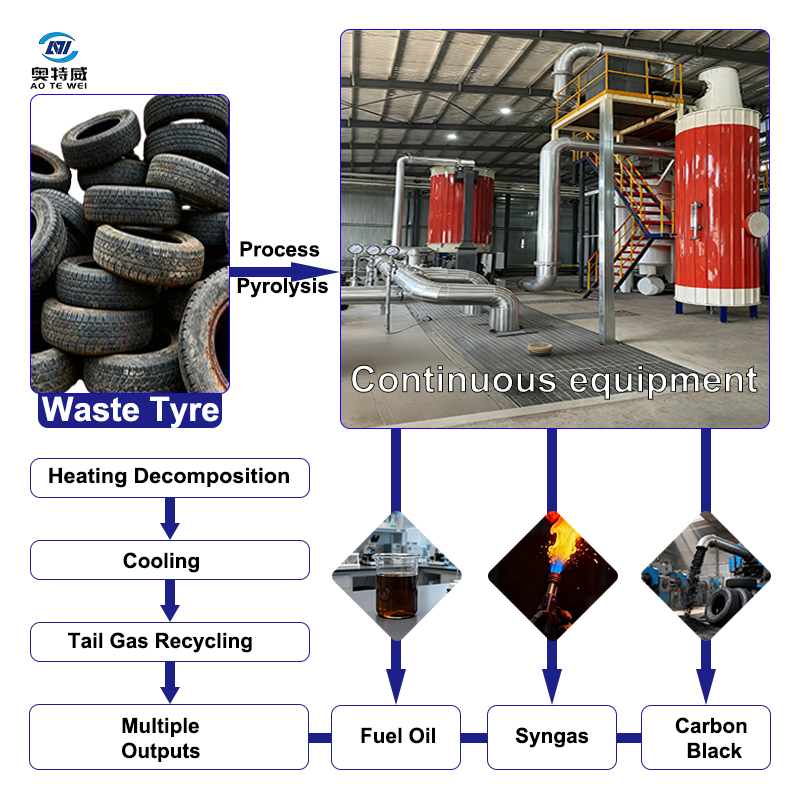
Thermal plastic recycling technologies take volume reduction even further. Pyrolysis systems, for example, thermally decompose plastic waste in an oxygen-limited environment, converting solid plastic into liquid fuel oil, combustible gas, and carbon black. The result is that a large volume of solid waste is almost entirely converted into usable products, leaving minimal residual material. This near-total conversion of solid waste into recoverable outputs is one of the most powerful arguments for integrating pyrolysis-based plastic recycling equipment into industrial waste management systems.
Composite plastic recycling plants add another dimension to this capability by processing mixed materials — such as aluminum-plastic composites — that cannot be effectively handled by single-stream mechanical recycling. By separating composite materials into their component streams and recovering each individually, these systems prevent composite plastic waste from accumulating as an unprocessed residual fraction, closing a gap that conventional plastic recycling approaches often leave open.
Waste Stream Integration and Closed-Loop Processing
Effective plastic recycling in industrial environments is not just about processing waste after it is generated — it is about integrating recycling into the production workflow so that waste accumulation never becomes a significant problem in the first place. Closed-loop plastic recycling systems capture production offcuts, rejected components, and packaging waste at the point of generation and return them to the production process as secondary raw material, often without any intermediate storage step.
This approach fundamentally changes the economics of waste management. Rather than treating plastic waste as a cost center — something that must be stored, transported, and disposed of at expense — closed-loop plastic recycling turns it into a value center. Recovered materials re-enter the production chain, reducing raw material purchasing costs and simultaneously eliminating the logistical burden of waste accumulation.
Even in cases where closed-loop reintegration is not feasible — for example, when plastic waste is too contaminated or degraded for direct mechanical reuse — pyrolysis-based plastic recycling provides an alternative pathway that still avoids landfill accumulation and generates recoverable energy value from the waste material.
Pyrolysis Technology as a High-Capacity Industrial Plastic Recycling Solution
The Mechanism of Pyrolysis in Plastic Waste Processing
Pyrolysis is a thermochemical process in which plastic waste is heated to high temperatures in the absence of oxygen, causing the long polymer chains in plastic materials to break down into shorter hydrocarbon molecules. These molecules condense into liquid fuel oil — often called pyrolysis oil — along with non-condensable combustible gases and a solid carbon residue known as carbon black. All three outputs have commercial value, making pyrolysis one of the most economically attractive forms of plastic recycling for industrial applications.
The particular advantage of pyrolysis for industrial plastic recycling lies in its feedstock flexibility. While mechanical recycling requires relatively clean, sorted plastic of a consistent type, pyrolysis systems can process mixed, contaminated, and composite plastics that would otherwise be unrecyclable. This makes pyrolysis especially well-suited to industrial environments, where plastic waste streams are often diverse and difficult to sort with high precision.
Industrial pyrolysis reactors designed for plastic recycling are available in batch, semi-continuous, and fully continuous configurations. Fully continuous systems offer the highest throughput capacity and the lowest labor requirements per unit of waste processed, making them the preferred choice for large industrial facilities with high and consistent plastic waste volumes. These systems can process tens of tons of plastic waste per day, eliminating accumulation problems even in the most waste-intensive industrial environments.
Energy Recovery as a Waste Reduction Multiplier
One of the most strategically important aspects of pyrolysis-based plastic recycling is the energy it recovers from waste material. Pyrolysis oil produced from plastic waste has a calorific value comparable to diesel fuel and can be used directly in industrial furnaces, generators, and boilers. Some facilities use this recovered energy to power the pyrolysis process itself, creating a partially self-sustaining plastic recycling operation that reduces both waste accumulation and external energy consumption simultaneously.
The combustible gases produced during pyrolysis can similarly be captured and used as process fuel, further reducing energy costs. Carbon black, the solid residue, has applications in rubber manufacturing, pigment production, and as a fuel. This multi-output value proposition means that pyrolysis-based plastic recycling does not just solve a waste problem — it creates an asset from a liability, with meaningful financial returns that improve the business case for investing in industrial recycling infrastructure.
Organizational and Environmental Benefits of Reducing Industrial Plastic Waste Accumulation
Facility Safety and Compliance Improvements
Plastic waste accumulation in industrial facilities creates tangible safety risks. Large volumes of stored plastic are a significant fire hazard, particularly in facilities that also handle flammable chemicals, hot processes, or electrical equipment. Regular plastic recycling that prevents waste from accumulating significantly reduces fire load within the facility, contributing directly to a safer working environment.
From a regulatory compliance perspective, industrial facilities that implement structured plastic recycling programs are better positioned to meet environmental audit requirements, maintain waste management certifications, and demonstrate due diligence in their environmental management systems. As environmental disclosure requirements become more stringent — including requirements to report waste generation and diversion rates — having documented plastic recycling processes in place provides facilities with the data and track record they need to satisfy regulators and corporate sustainability commitments alike.
Long-Term Environmental Impact and Circular Economy Alignment
Plastic recycling in industrial environments contributes to broader environmental goals that extend well beyond the facility fence line. Every ton of plastic waste recycled rather than landfilled represents a reduction in the leaching of plastic contaminants into soil and groundwater, a reduction in greenhouse gas emissions from landfill decomposition, and a reduction in the demand for virgin petrochemical feedstocks. At industrial scale, these benefits accumulate quickly and contribute meaningfully to sector-wide environmental improvement.
The alignment of industrial plastic recycling with circular economy principles is increasingly recognized as a strategic business advantage. Customers, investors, and regulators are all placing greater value on demonstrated commitment to waste reduction and resource circularity. Industrial facilities that lead in plastic recycling adoption are better positioned to meet supply chain sustainability requirements, access green finance instruments, and build the kind of long-term operational resilience that reduces dependence on volatile virgin material markets.
Looking forward, the trajectory of both regulation and technology strongly favors expanding industrial plastic recycling capacity. As pyrolysis technology matures and costs decrease, and as regulatory landfill restrictions tighten further, the economics of industrial plastic waste recycling will only become more compelling. Facilities that invest in capable, scalable plastic recycling infrastructure today are positioning themselves ahead of a transition that will eventually affect every industrial sector.
FAQ
What types of plastic waste can industrial pyrolysis recycling systems process?
Industrial pyrolysis systems designed for plastic recycling are capable of processing a wide range of plastic types, including polyethylene, polypropylene, polystyrene, ABS, and mixed or contaminated plastic waste that is unsuitable for mechanical recycling. Composite materials such as aluminum-plastic laminates can be handled by specialized composite recycling plants that separate material streams prior to or during thermal processing.
How does plastic recycling reduce storage costs in industrial facilities?
Plastic recycling reduces storage costs by eliminating the need to hold large volumes of accumulated waste while awaiting disposal. Mechanical processing such as shredding reduces waste volume immediately, while thermal processing through pyrolysis converts solid plastic waste into liquid and gas outputs that are far easier to store or use. Facilities that process plastic waste as it is generated avoid the capital and operational costs of dedicated waste storage areas entirely.
Is plastic recycling economically viable for small and medium-sized industrial operations?
Economic viability depends on the volume and type of plastic waste generated. For facilities generating consistent volumes of processable plastic waste, plastic recycling — particularly pyrolysis-based systems — can generate positive returns through recovered fuel oil and material sales. Smaller facilities may find it more economical to consolidate waste streams with neighboring operations or use shared recycling services, while still reducing their individual waste accumulation burden.
How does plastic recycling support corporate sustainability and ESG reporting goals?
Structured plastic recycling programs provide facilities with measurable waste diversion data that directly supports environmental, social, and governance reporting. Tracking the volume of plastic waste recycled versus disposed of in landfill demonstrates tangible progress toward waste reduction targets. Pyrolysis-based recycling also contributes to carbon emissions reporting by reducing reliance on virgin materials and recovering energy that would otherwise need to be sourced externally.
Table of Contents
- The Industrial Plastic Waste Problem and Why It Demands a Systemic Response
- How Plastic Recycling Physically Reduces Waste Accumulation
- Pyrolysis Technology as a High-Capacity Industrial Plastic Recycling Solution
- Organizational and Environmental Benefits of Reducing Industrial Plastic Waste Accumulation
-
FAQ
- What types of plastic waste can industrial pyrolysis recycling systems process?
- How does plastic recycling reduce storage costs in industrial facilities?
- Is plastic recycling economically viable for small and medium-sized industrial operations?
- How does plastic recycling support corporate sustainability and ESG reporting goals?