Refining Used Oil: Advanced Re-Refining Technology for High-Quality Base Oil Recovery

Get a Free Quote

Our representative will contact you soon.
Email
WhatsApp / Mobile
Name
Company Name
Message
0/1000

refining used oil

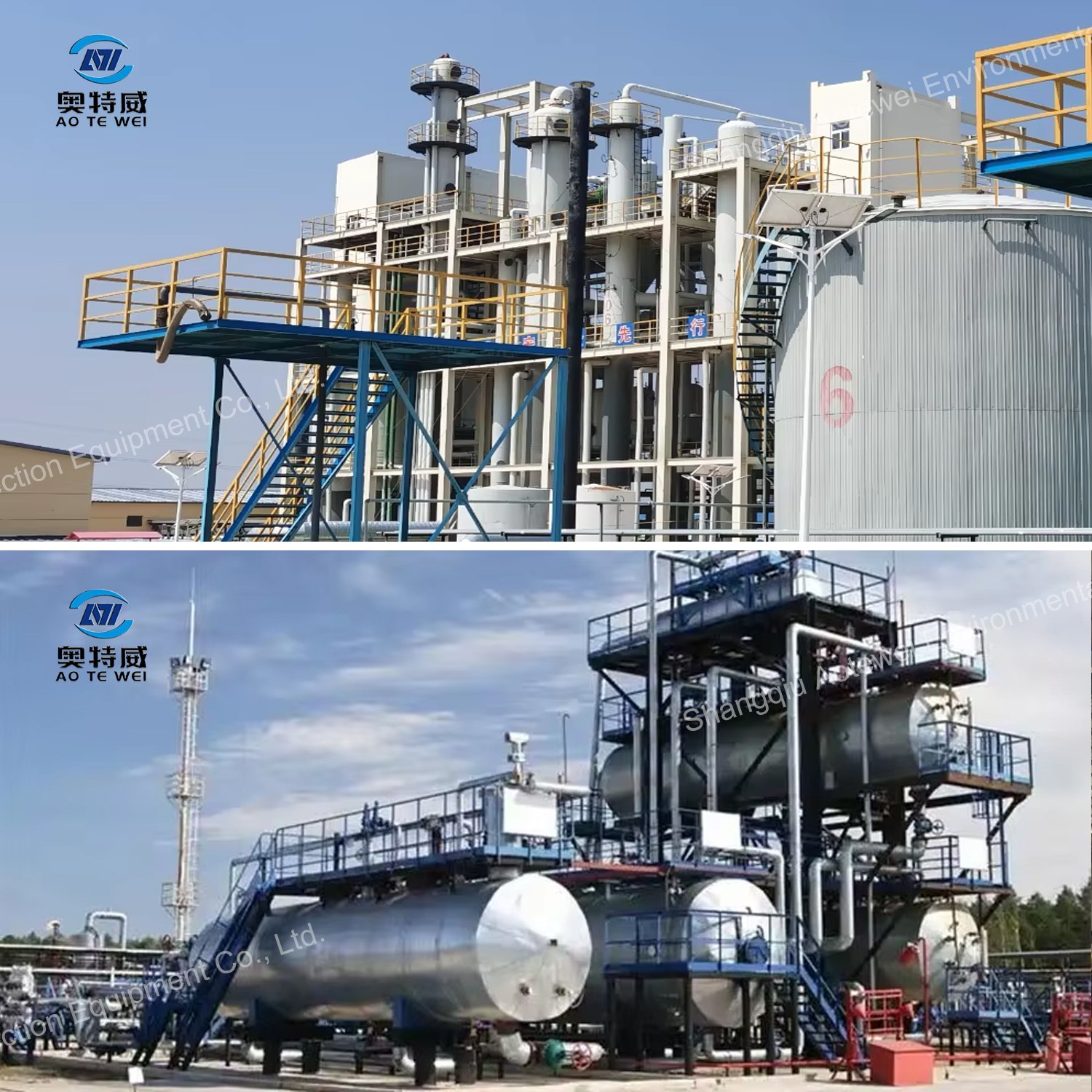
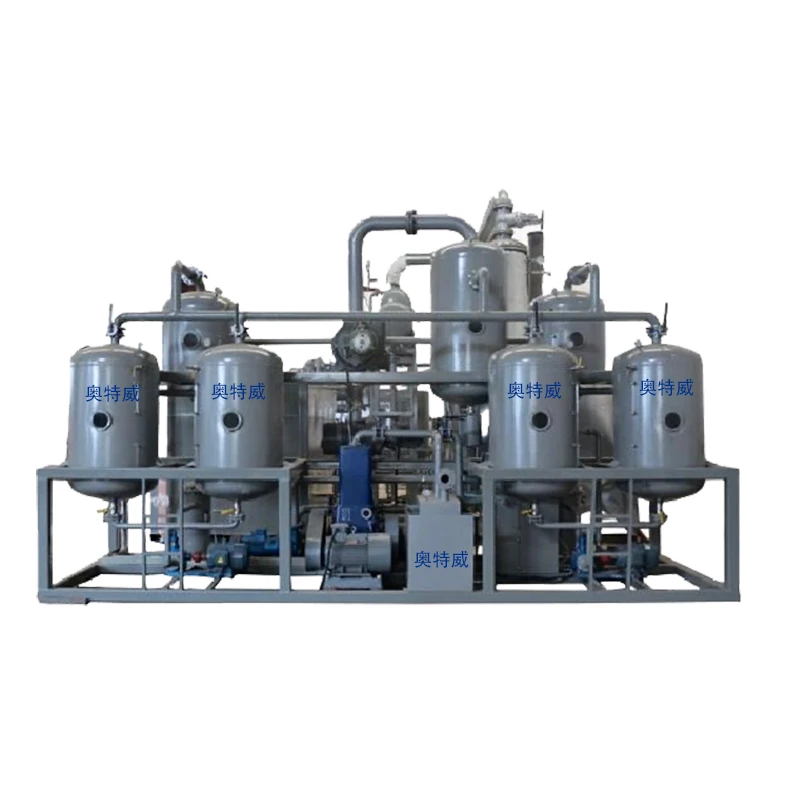
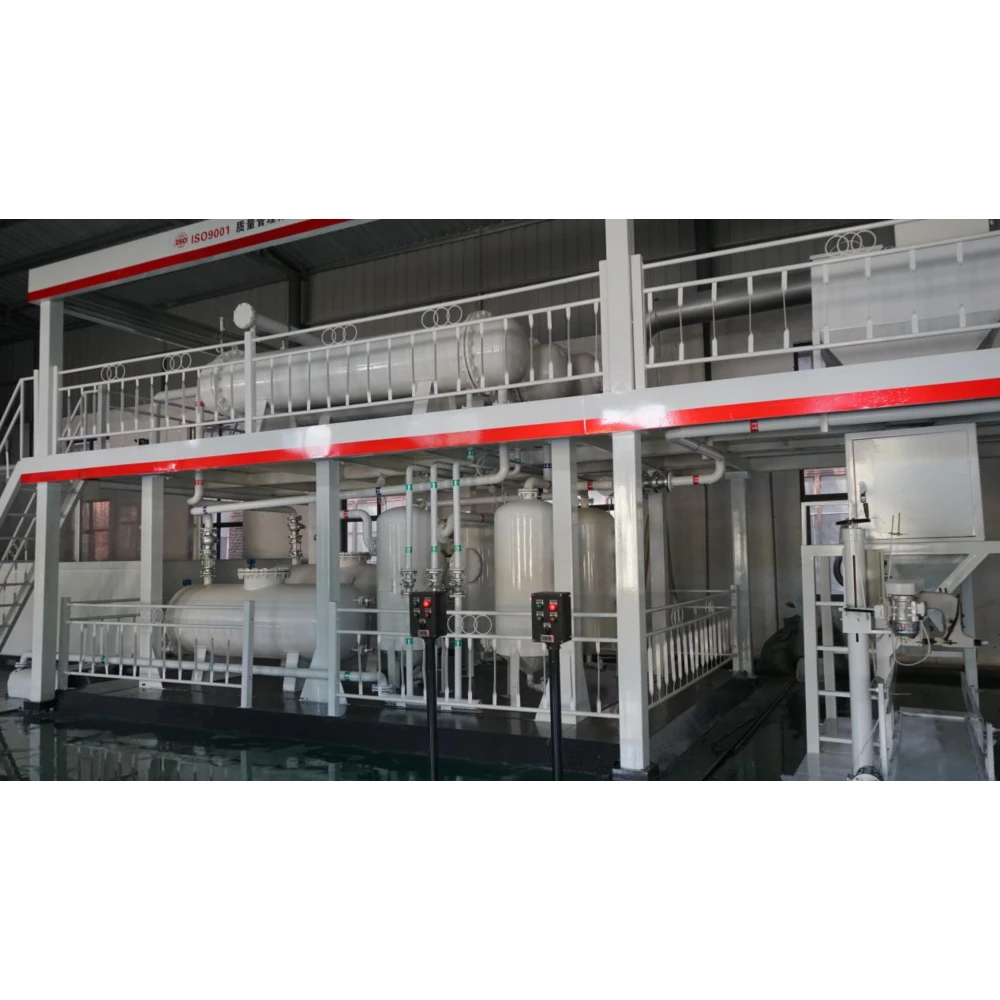
Refining used oil is a critical industrial process that transforms degraded, contaminated, or spent lubricating oil back into a high-quality base oil suitable for reuse. As global demand for sustainable energy solutions grows, refining used oil has emerged as one of the most environmentally responsible and economically viable methods of resource recovery. Rather than disposing of used oil through incineration or landfill, the refining process extracts maximum value from every liter, reducing waste and conserving natural resources at the same time. The core function of refining used oil is to remove harmful contaminants such as water, heavy metals, oxidized compounds, fuel dilution, and degraded additives that accumulate during normal engine or industrial operation. Through a series of carefully engineered stages, including pre-treatment, vacuum distillation, hydrotreatment, and filtration, the process systematically strips away impurities while preserving the valuable hydrocarbon chains that form the backbone of high-grade lubricant base stock. Technologically, modern refining used oil systems leverage advanced vacuum distillation units that operate at precisely controlled temperatures and pressures, ensuring minimal thermal degradation of the recovered oil. Hydrotreatment technology further enhances the quality of the output by saturating unstable molecular bonds and removing sulfur, nitrogen, and residual metal contaminants. The result is a base oil that meets or exceeds API Group II and Group III specifications, making it directly comparable to virgin base oil in performance and purity. Applications for refined used oil span a wide range of industries. Automotive lubricants, industrial gear oils, hydraulic fluids, and transformer oils can all be formulated using re-refined base stock. Refineries, fleet operators, industrial manufacturers, and municipal waste management programs all benefit from integrating refining used oil into their operational frameworks. Beyond the technical and commercial advantages, refining used oil plays a vital role in reducing carbon emissions, lowering dependence on crude oil extraction, and supporting circular economy initiatives worldwide.

New Product Releases

Refining used oil delivers a set of practical, real-world benefits that make it an attractive choice for businesses, governments, and individuals who want to reduce costs, protect the environment, and maintain high operational standards. Here is a straightforward look at why refining used oil makes sense for anyone generating or managing spent lubricants. First, refining used oil saves money. Purchasing virgin base oil from crude oil refineries is expensive, and prices fluctuate with global oil markets. By refining used oil, businesses can produce their own high-quality base stock at a fraction of the cost. Fleet operators, industrial plants, and oil collection companies that invest in refining used oil technology consistently report significant reductions in raw material expenditure. The return on investment is measurable and often achieved within a relatively short operational period. Second, refining used oil protects the environment in a direct and meaningful way. Used oil is one of the most hazardous waste streams generated by modern industry. A single liter of improperly disposed used oil can contaminate up to one million liters of fresh water. By choosing to refine used oil instead of dumping or burning it, businesses eliminate a major pollution risk and demonstrate genuine environmental responsibility. This matters not only for regulatory compliance but also for brand reputation and community relations. Third, refining used oil produces a product that performs. The re-refined base oil generated through modern refining used oil processes meets rigorous international quality standards. It is not a lower-grade substitute. Independent testing consistently shows that re-refined base oil performs on par with virgin base oil in viscosity, oxidation stability, and wear protection. Customers who use lubricants formulated from re-refined stock experience no compromise in equipment performance or service life. Fourth, refining used oil supports energy independence. Every barrel of base oil recovered through refining used oil is a barrel that does not need to be extracted from the ground. For countries seeking to reduce their reliance on imported crude oil, building domestic refining used oil capacity is a strategic and practical step. It strengthens local supply chains and reduces exposure to international price volatility. Fifth, refining used oil simplifies waste management. Businesses that generate large volumes of used oil face real logistical and regulatory challenges in handling and disposing of it safely. Partnering with or investing in refining used oil operations converts a liability into an asset. Instead of paying for hazardous waste disposal, businesses can generate revenue from their used oil streams. Sixth, refining used oil aligns with global sustainability goals. Regulatory frameworks in the European Union, North America, and Asia increasingly mandate or incentivize the collection and re-refining of used oil. Businesses that adopt refining used oil practices position themselves ahead of tightening regulations and gain access to green procurement markets where sustainability credentials are a competitive advantage.

Tips And Tricks

Company Updates Factory Audit Video | On-site Shooting of Aotewei Environmental Protection Equipment, Transparently Showing Manufacturing Strength

08

Apr

Company Updates Factory Audit Video | On-site Shooting of Aotewei Environmental Protection Equipment, Transparently Showing Manufacturing Strength

To further improve supply chain transparency and optimize the factory audit experience for domestic and overseas customers, Shangqiu Aotewei Environmental Protection Equipment Co., Ltd. has recently completed a comprehensive update of its factory aud...
View More

Get a Free Quote

Our representative will contact you soon.
Email
WhatsApp / Mobile
Name
Company Name
Message
0/1000

refining used oil

Advanced Vacuum Distillation Technology for Superior Oil Recovery

Advanced Vacuum Distillation Technology for Superior Oil Recovery

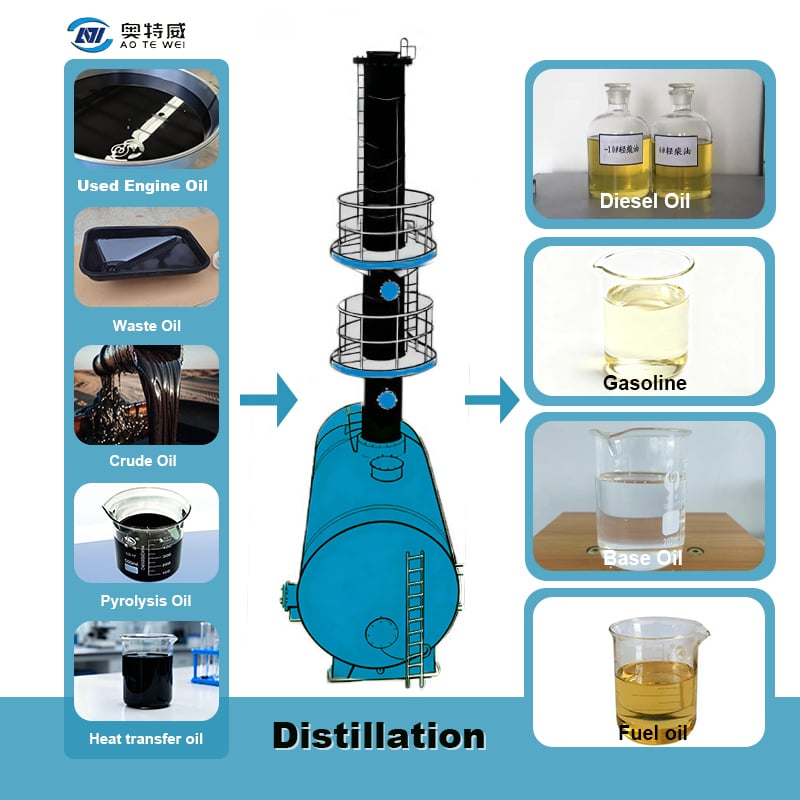
One of the most important technological features that sets modern refining used oil systems apart is the use of advanced vacuum distillation. This process is the heart of any high-performance used oil refinery, and understanding how it works helps explain why the output quality is so consistently high. When used oil enters the refining system, it carries a complex mixture of contaminants. Water, light fuel fractions, and dissolved gases are present alongside the valuable base oil molecules. If these contaminants are not removed carefully, they can cause thermal cracking, color degradation, and loss of viscosity in the final product. Vacuum distillation solves this problem by reducing the boiling point of the oil fractions through the application of negative pressure. By operating under vacuum conditions, the system separates water and light ends at much lower temperatures than would be required under atmospheric pressure. This protects the integrity of the base oil molecules and prevents the formation of unwanted byproducts. The result is a cleaner, more stable intermediate product that is ready for further upgrading. Modern refining used oil plants use multi-stage vacuum distillation columns that allow operators to precisely control the cut points between different oil fractions. This means that light base oils, medium base oils, and heavy base oils can be separated and collected independently, giving the refinery the flexibility to produce a range of products tailored to specific market demands. The precision of vacuum distillation also means that the process is highly efficient. Recovery rates in well-designed refining used oil systems routinely exceed 80 percent of the incoming used oil volume, which is a remarkable yield given the complexity of the feedstock. For customers and investors evaluating refining used oil technology, the quality and efficiency of the vacuum distillation unit is one of the most important factors to assess. A well-engineered vacuum distillation system reduces energy consumption, minimizes waste streams, and maximizes the volume of saleable base oil produced from every batch of used oil processed. This directly translates into better economics and a stronger return on investment for anyone operating a refining used oil facility.
Hydrotreatment Process Delivers Base Oil That Meets International Quality Standards

Hydrotreatment Process Delivers Base Oil That Meets International Quality Standards

The hydrotreatment stage of refining used oil is what elevates the recovered base oil from a serviceable recycled product to a premium-grade lubricant base stock that competes directly with virgin oil on quality and performance. Understanding the role of hydrotreatment helps customers appreciate why re-refined base oil produced through a complete refining used oil process is not a compromise but a genuine upgrade. After vacuum distillation, the recovered oil still contains trace levels of sulfur compounds, nitrogen compounds, residual metal contaminants, and unstable aromatic molecules. These impurities, if left in the final product, would cause the lubricant to oxidize more quickly, generate harmful deposits in engines and machinery, and fail to meet the specifications required by original equipment manufacturers. Hydrotreatment addresses all of these issues in a single, highly effective processing step. In the hydrotreatment reactor, the distilled oil is exposed to hydrogen gas under elevated temperature and pressure in the presence of a specialized catalyst. The hydrogen reacts with sulfur and nitrogen compounds, converting them into hydrogen sulfide and ammonia, which are then removed from the system. Unstable double bonds in aromatic and olefinic molecules are saturated, producing a more chemically stable base oil with improved oxidation resistance and a cleaner color. The removal of residual metals through the combined action of pre-treatment and hydrotreatment ensures that the final base oil meets the strict limits set by API, ASTM, and other international standards. Re-refined base oil produced through a full refining used oil process that includes hydrotreatment consistently achieves API Group II classification, and in some cases Group III, which represents the highest tier of conventionally refined base oil. For customers who formulate lubricants, this means they can blend re-refined base stock with standard additive packages and produce finished lubricants that carry full OEM approvals. For end users, it means that equipment lubricated with products made from re-refined oil receives the same level of protection as equipment lubricated with products made from virgin base oil. The hydrotreatment stage is what makes this equivalence possible, and it is a defining feature of any serious refining used oil operation.
Circular Economy Integration Turns Waste Oil Into a Renewable Resource

Circular Economy Integration Turns Waste Oil Into a Renewable Resource

Refining used oil is not just a technical process. It is a practical expression of circular economy principles that delivers measurable environmental and economic value to everyone in the supply chain. By closing the loop on used oil, refining used oil operations transform what would otherwise be a hazardous waste problem into a renewable resource that supports sustainable industrial activity. The circular economy model applied to refining used oil works as follows. Lubricating oil is produced from base oil and additives, sold to end users, used in engines and machinery, collected after use, and then returned to a refining used oil facility where it is processed back into base oil. This base oil re-enters the lubricant supply chain, displacing the need for virgin base oil derived from crude oil. The loop is closed, and the value embedded in the original oil is preserved and recirculated rather than destroyed. The environmental benefits of this circular approach are substantial and well-documented. Refining used oil requires significantly less energy than producing base oil from crude oil. Studies have shown that the re-refining process consumes up to 70 percent less energy than primary refining, which translates directly into lower greenhouse gas emissions per liter of base oil produced. For businesses with carbon reduction commitments, sourcing base oil from refining used oil operations is one of the most effective ways to reduce the carbon footprint of their lubricant supply chain. The economic benefits are equally compelling. Used oil collection networks create local employment and generate revenue for collectors, transporters, and processors. Refining used oil facilities create skilled jobs in engineering, operations, and quality control. The base oil produced is sold into local and regional markets, keeping value within the economy rather than exporting it to crude oil producing regions. For governments and development agencies looking to build sustainable industrial capacity, supporting refining used oil infrastructure is a high-impact investment. For businesses looking to differentiate themselves in markets where sustainability credentials matter, partnering with refining used oil operations provides a credible and verifiable green supply chain story that resonates with customers, regulators, and investors alike.

Get a Free Quote

Our representative will contact you soon.
Email
WhatsApp / Mobile
Name
Company Name
Message
0/1000
Newsletter
Please Leave A Message With Us